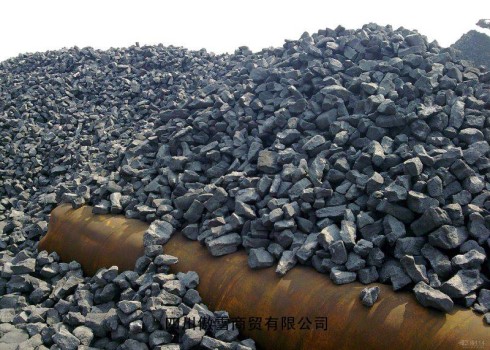
China Coke Market Remains Stable; Overall Supply and Demand Balanced
https://img.100ppi.com/sunsirs_news/2026/08/03/96f3658363b6e4b8b6ed51c1f05308a3.jpg
According to the SunSirs commodity market analysis system, the average price of quasi-first-grade metallurgical coke was 1,957 RMB/ton on July 31, 2026. Regarding spot prices: the first round of price reductions (down 50 RMB/ton for wet-quenched and 55 RMB/ton for dry-quenched coke) took effect on July 22, and the second round—with the same magnitude of reduction—was fully implemented on July 28–29. As of July 31, the ex-warehouse price for quasi-first-grade metallurgical coke at Rizhao Port was 1,630 RMB/ton (down 10 RMB/ton for the week). Prices remained temporarily stable for Tangshan first-grade dry-quenched coke (2,175 RMB/ton) and Changzhi quasi-first-grade dry-quenched coke (1,975 RMB/ton); Lyuliang quasi-first-grade dry-quenched coke was priced at approximately 1,580 RMB/ton, while the mainstream price for quasi-first-grade wet-quenched coke at ports was 1,650 RMB/ton.
Market Trading: Domestic Coal—Safety supervision in Shanxi has become institutionalized (with the “Seventeen Measures” currently soliciting public opinion), and some mines have halted production due to expired licenses, resulting in a slow resumption of operations. Supplies of low-sulfur prime coking coal remain structurally tight (Linfen low-sulfur coal held steady at 2,020 RMB/ton), though Jinzhong medium-sulfur prime coking coal fell by 10 RMB/ton over the week, and Lyuliang high-sulfur prime coking coal traded at 1,645 RMB/ton. Auction results were mixed, with the overall market showing a weak, fluctuating trend. Imported Coal—Mongolian No. 5 raw coal traded weakly at 1,170–1,179 RMB/ton, with sluggish trading activity at border crossings; seaborne “second-tier” Australian coking coal was priced at 1,670 RMB/ton (CIF, down 10 RMB/ton for the week), and port inventories of imported coking coal stood at 6.7 million tons (an increase of 316,000 tons for the week). Market Overview: Hot Metal: The average daily hot metal output across 247 steel mills stands at 2.3555–2.377 million tonnes (a weekly decline of 15,000–21,500 tonnes). The blast furnace operating rate is 82.09% (down 0.64 percentage points week-on-week), and capacity utilization is 89.21%. Tangshan has intensified phased production restrictions (20% blast furnace capacity cut) effective late July. Steel Mill Profits: Blast furnace profit for rebar is approximately -79 RMB/tonne; the profitability rate of steel mills has dropped to 34.63%–37.23%, with the scope of losses widening. Procurement Strategy: Steel mills have shifted their coke strategy from “securing supply to maintain production” to “controlling volumes, reducing inventories, and pressuring prices.” Mills generally avoid locking in prices early, purchasing only to meet immediate needs; traders are adopting a wait-and-see approach; and coke enterprises are seeing slower shipments and an increase in covert price-cutting promotions.
Steel Demand & Supply: Supply: Capacity utilization at independent coke enterprises is 74.67%, with an average daily output of 641,000 tonnes; steel mill-affiliated coking output is 474,000 tonnes, bringing the total daily output to 1.115 million tonnes. There is little incentive for voluntary production cuts given the marginal profits (while the Coking Association called for a 30% production cut this week, its actual implementation remains doubtful). Demand: As hot metal output declines, daily coke consumption falls in tandem. Based on an estimate of 0.5 tonnes of coke consumed per tonne of hot metal, a weekly drop of 20,000 tonnes in hot metal output translates to a reduction in essential coke demand of approximately 10,000 tonnes per day.
Coke Analyst View (SunSirs): Short-term (early to mid-August): Until steel mill profits recover, there is a strong expectation for a third round of price cuts (in early August). Institutions forecast a total of 3–4 rounds of cuts, with each round reducing prices by 50–55 RMB. Prices for quasi-first-grade dry-quenched coke may dip to the 1,740–1,865 RMB/tonne range, while port prices for quasi-first-grade wet-quenched coke could fall to 1,600–1,650 RMB/tonne. On the futures market, the J2609 contract faces resistance in the 1,800–1,850 RMB range, with cost support seen at the 1,780 RMB level.
SunSirs has been continuously tracking price data for over 200 commodities for nearly 20 years, please contact support@sunsirs.com for subscription.
【Copyright Notice】In the spirit of openness and inclusiveness of the Internet, SunSirs welcomes all media and institutions to reprint and quote our original content. If reprinted, please mark the source SunSirs.
Fonte: https://www.sunsirs.com/m-pt/page/commodity-news-detail/commodity-news-detail-34926.html
Data: 2026-08-03 03:11:00
RISCO DE NÃO CONFORMIDADE?
As resoluções da ANP são dinâmicas. Um lote fora da especificação pode gerar multas pesadas, recall e perda de credibilidade.
A Texas Oiltech atua como sua barreira de controle, fornecendo laudos acreditados ISO/IEC 17025 para liberação comercial ágil.
- Verificação: Diesel, Gasolina, QAV-1, Biodiesel
- Garantia: Laudos aceitos pelos órgãos reguladores
Texas Oiltech Laboratories | Laboratório Acreditado | Campinas, SP
Share this content:











Publicar comentário